-
Courses

Courses
Choosing a course is one of the most important decisions you'll ever make! View our courses and see what our students and lecturers have to say about the courses you are interested in at the links below.
-
University Life
University Life
Each year more than 4,000 choose University of Galway as their University of choice. Find out what life at University of Galway is all about here.
-
About University of Galway
About University of Galway
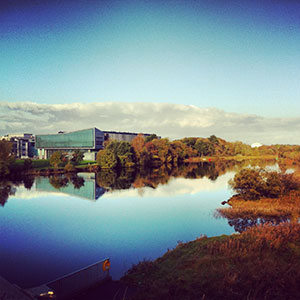
Since 1845, University of Galway has been sharing the highest quality teaching and research with Ireland and the world. Find out what makes our University so special – from our distinguished history to the latest news and campus developments.
-
Colleges & Schools
Colleges & Schools
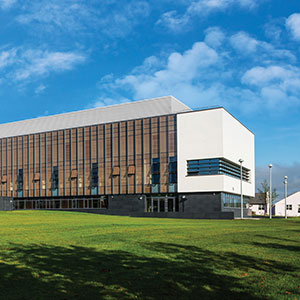
University of Galway has earned international recognition as a research-led university with a commitment to top quality teaching across a range of key areas of expertise.
-
Research & Innovation
Research & Innovation
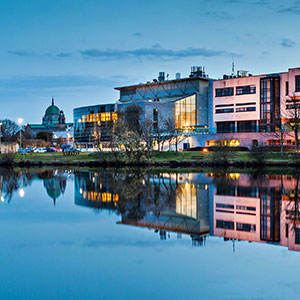
University of Galway’s vibrant research community take on some of the most pressing challenges of our times.
-
Business & Industry
Guiding Breakthrough Research at University of Galway
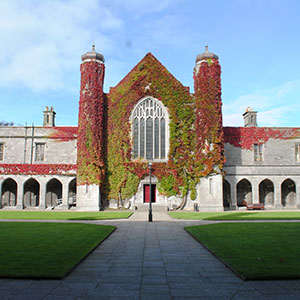
We explore and facilitate commercial opportunities for the research community at University of Galway, as well as facilitating industry partnership.
-
Alumni & Friends

Alumni & Friends
There are 128,000 University of Galway alumni worldwide. Stay connected to your alumni community! Join our social networks and update your details online.
-
Community Engagement
Community Engagement
At University of Galway, we believe that the best learning takes place when you apply what you learn in a real world context. That's why many of our courses include work placements or community projects.
 Accessibility & Language
Tab 1 Content
The Reception Gap: A National Study of Emergency International Protection Accommodation
Mar
05
2026
Posted: 15:07 GMT
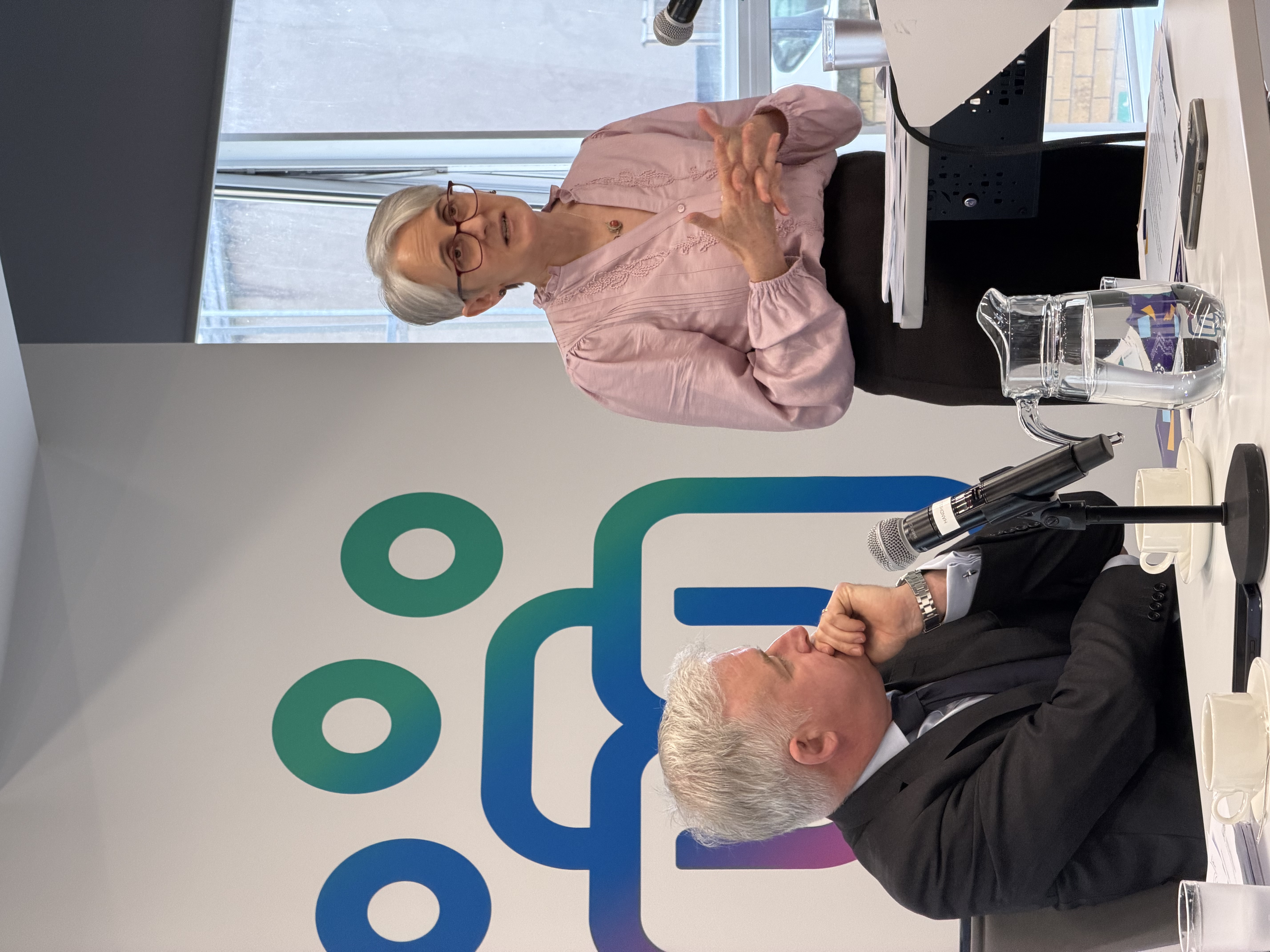
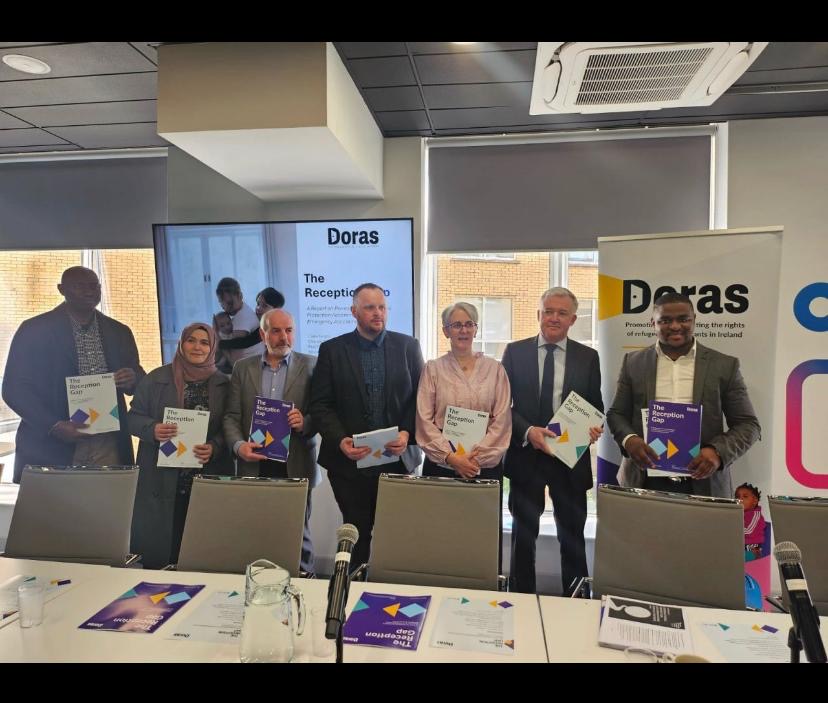
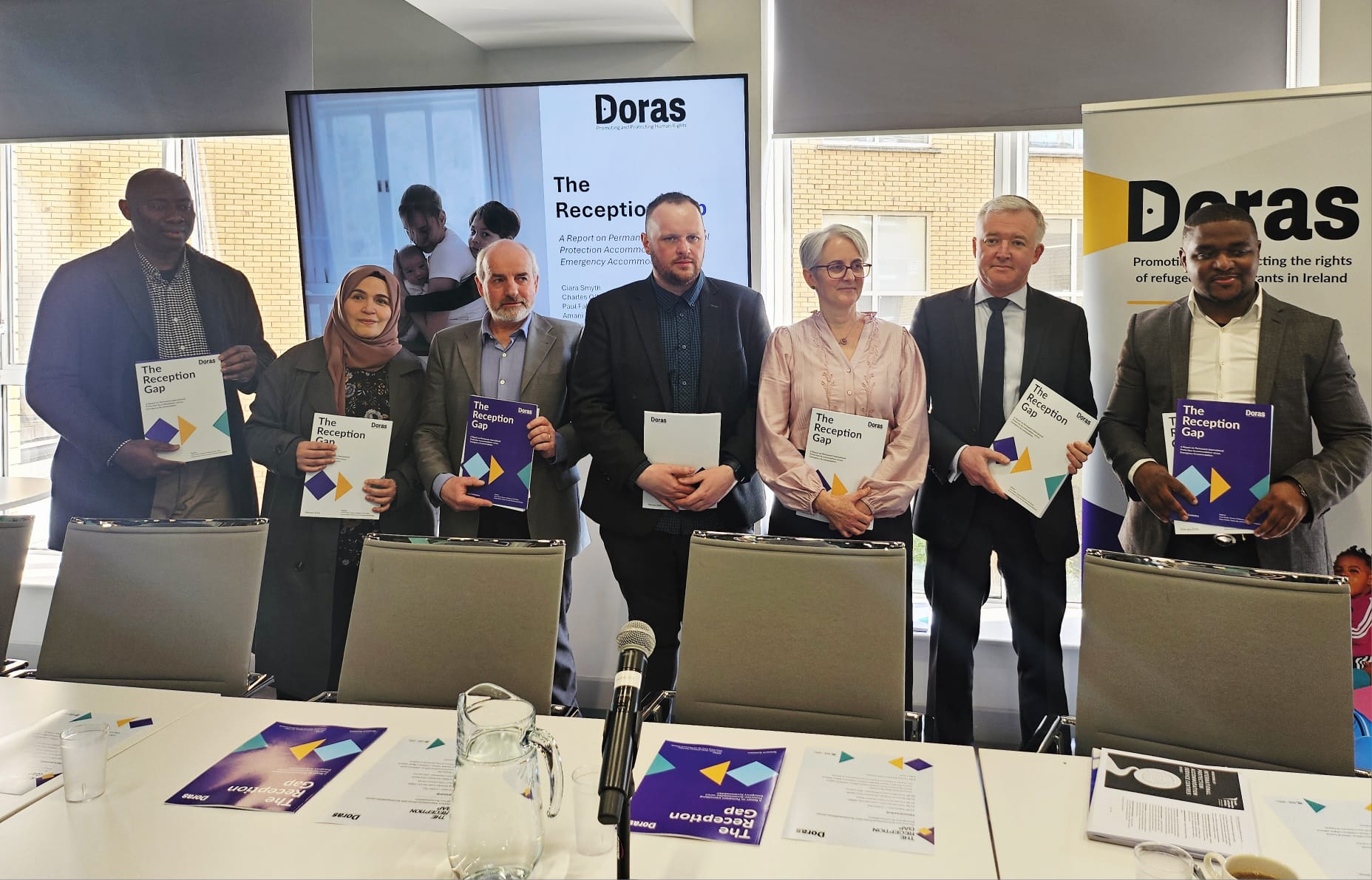
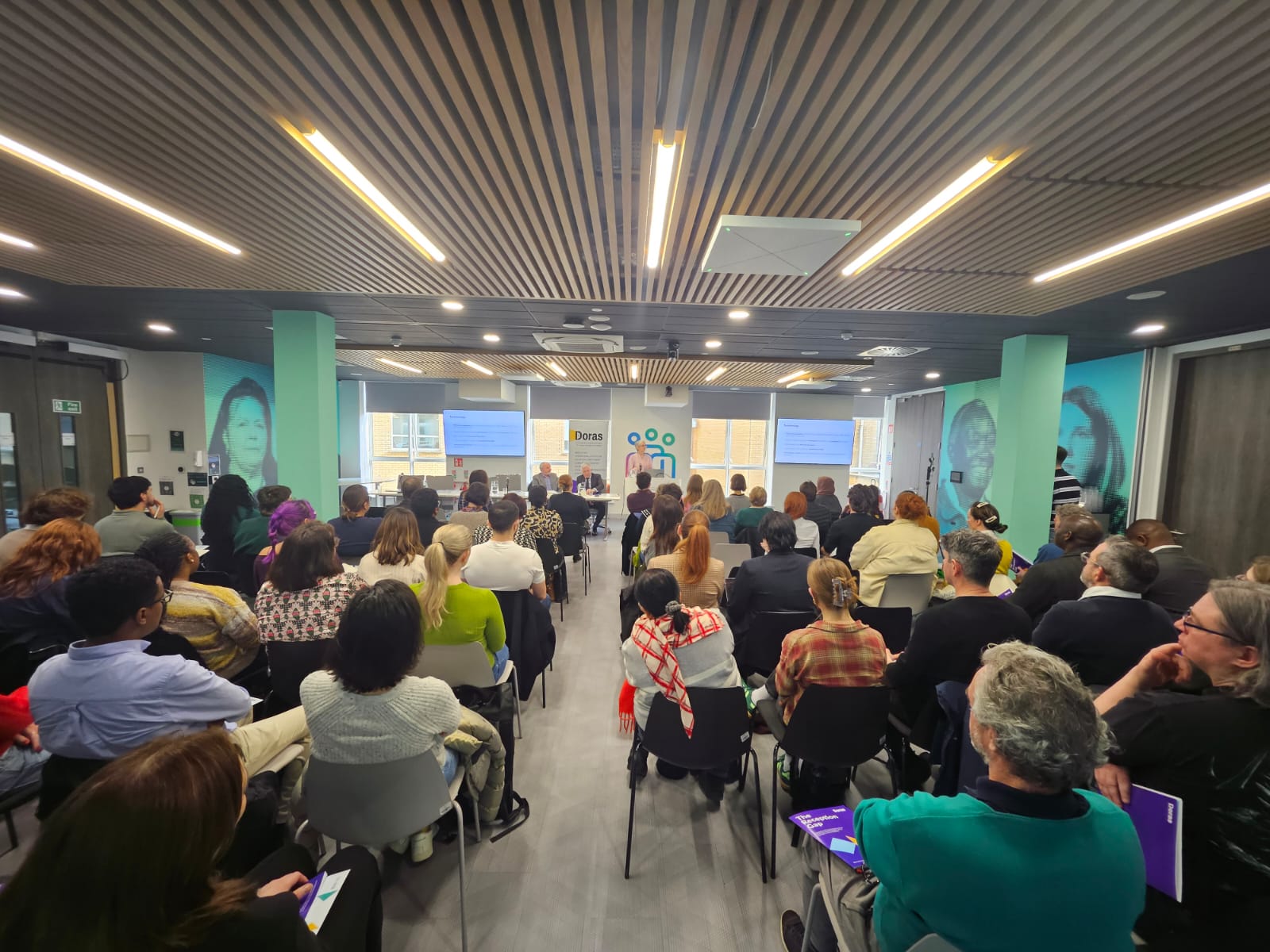
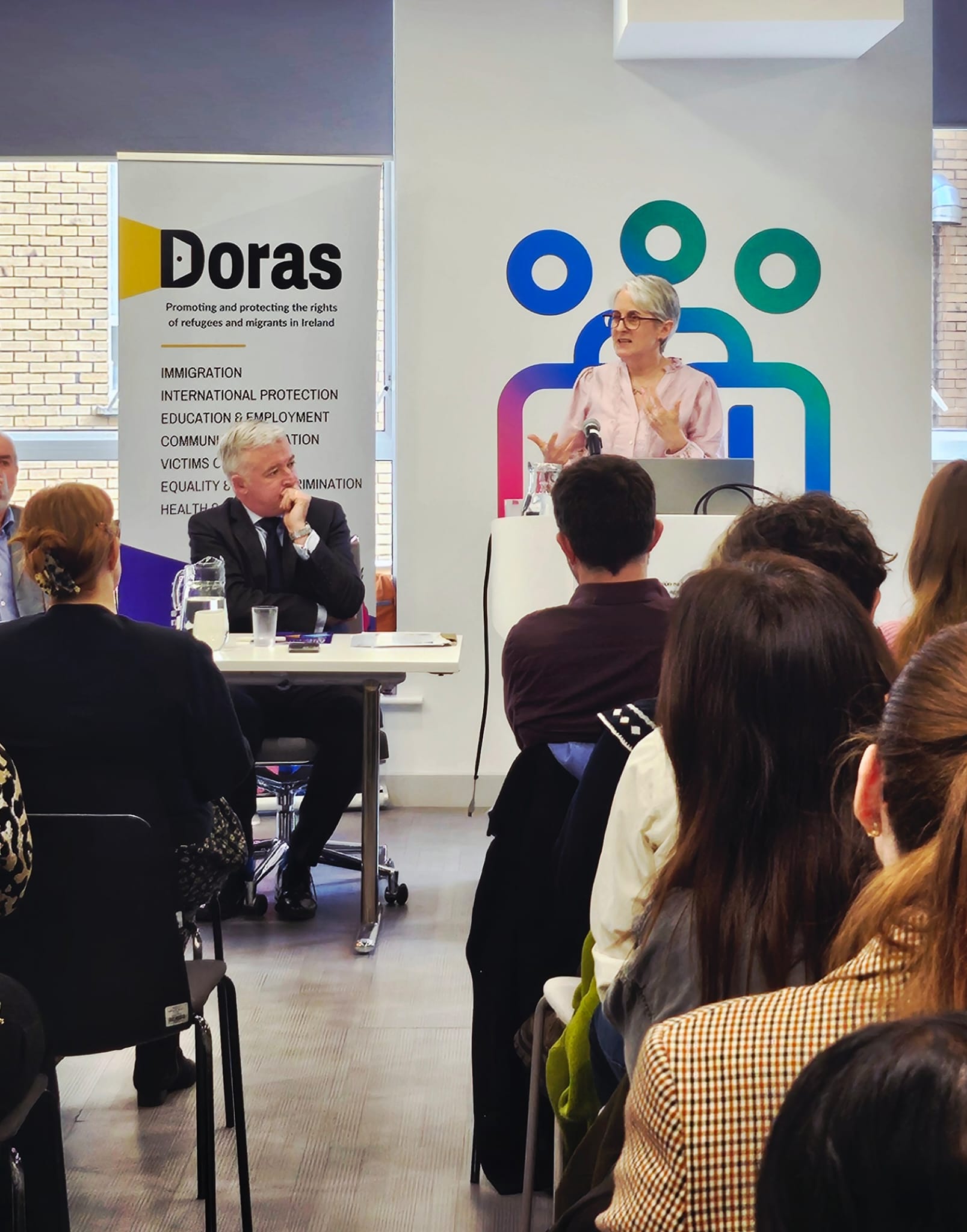
A new report published by Doras and funded by the Irish Human Rights and Equality Commission was led by Prof Ciara Smyth and Dr Charles O’Mahony. The research examines the growing gap between permanent International Protection Accommodation Service (IPAS) centres and the expanding system of emergency accommodation used to house people seeking international protection in Ireland.
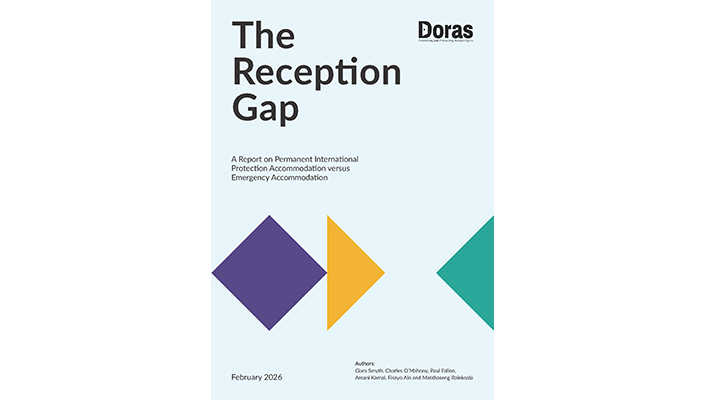
The Report Reception Gap: Permanent International Protection Accommodation versus Emergency Accommodation explores reception conditions with particular attention to the lived experiences of residents in emergency accommodation. The report examines accommodation conditions, governance and accountability arrangements, access to services, complaints and remedies, transfers within the system, and the everyday impacts of prolonged congregated living.
While permanent IPAS centres have been subject to increased scrutiny in recent years, emergency accommodation now houses the majority of people seeking international protection in Ireland. Despite this, it remains largely unexamined, weakly regulated, and effectively outside independent oversight. Existing inspection mechanisms apply only to permanent centres, meaning that thousands of residents in emergency accommodation fall outside formal monitoring frameworks.
The research was carried out by Prof Ciara Smyth and Dr Charles O’Mahony (University of Galway) and Paul Fallon, with the assistance of peer researchers Amani Kamal, Fisayo Alo and Matsaseng Ralekoala. The project draws on a national survey of residents living in emergency accommodation (n=256), peer-led focus groups, and key informant interviews with stakeholders working across the reception system.
The findings document a system characterised by inconsistency, insecurity, and structural challenges affecting daily life in accommodation centres. Stakeholders interviewed for the study emphasised that residents’ experiences often depend heavily on the particular centre in which they are placed, with significant variation in management practices, available supports, and living conditions.
The report calls for a decisive shift away from reactive, emergency-driven responses towards a coherent, rights-based reception framework. Among its recommendations are the extension of independent oversight to all forms of accommodation, the development of consistent enforceable standards across the reception system, and stronger mechanisms to ensure accountability and effective remedies for residents.
This project received funding from the Irish Human Rights and Equality Commission (IHREC) Grants Scheme as part of the Commission’s statutory power to promote human rights and equality under the Irish Human Rights and Equality Commission Act 2014. The views expressed in this publication are those of the authors and do not necessarily represent those of the Irish Human Rights and Equality Commission.